






Understanding Chemical Peels and Hyperpigmentation
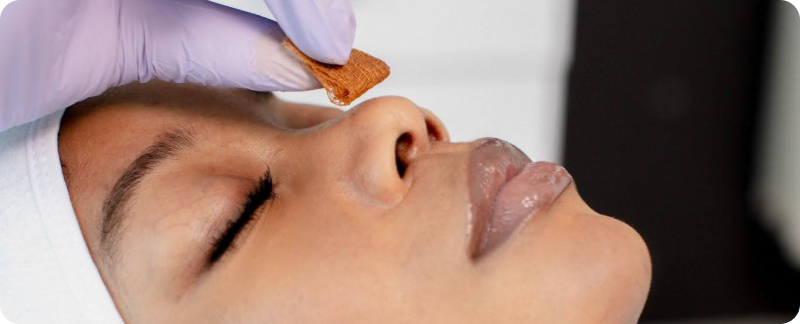
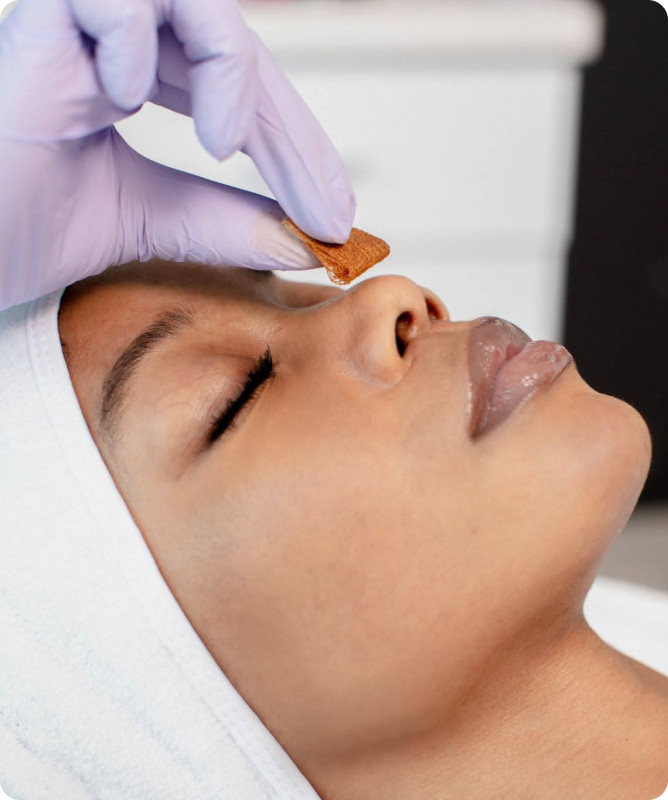
If you’ve struggled with dark spots, uneven skin tone, or stubborn patches of discoloration, you’re not alone. Whether you’re dealing with melasma, dark spots, sun spots, post-inflammatory hyperpigmentation (PIH) from acne, or general uneven skin tone, hyperpigmentation is one of the most common skin concerns we see at WIFH, affecting patients of all ages, backgrounds, and skin tones. The good news? A chemical peel for hyperpigmentation can be one of the most effective ways to reveal clearer, more radiant skin.
Not all chemical peels are created equal. Choosing the right peel depends on your unique skin type, the underlying cause of your discoloration, and your long-term treatment goals. Our team at WIFH has developed deep expertise in customizing chemical peel protocols that deliver real, visible results safely and effectively for every skin tone.
In this comprehensive guide, we will help you understand how chemical peels work, which options are best for hyperpigmentation, and how to choose the safest and most effective treatment plan for your skin.
What Is Hyperpigmentation?
Before exploring treatment options, it’s essential to understand what hyperpigmentation actually is and why it develops. Hyperpigmentation is a common skin condition that shows up as areas of skin appearing darker than the surrounding complexion. It occurs when melanin, the pigment responsible for skin color, is produced in excess or becomes unevenly distributed due to factors like sun exposure, inflammation, or hormonal changes
While hyperpigmentation is medically harmless, it can have a significant emotional impact. Many patients describe feeling self-conscious about their appearance, spending considerable time and money trying to conceal dark spots with makeup, or avoiding social situations altogether. Understanding the root cause of your discoloration is the first step toward effective treatment.
Common Causes of Hyperpigmentation
- Sun-Induced Pigmentation from UV Exposure: Chronic UV exposure triggers melanin production as a defense mechanism. Over time, this can lead to sunspots, freckles, and uneven tone, particularly on the face, chest, shoulders, and hands.
- Post-Inflammatory Hyperpigmentation (PIH) from Acne or Inflammation: When skin experiences inflammation from acne, eczema, bug bites, or even aggressive skincare, it responds by ramping up melanin production. Dark marks can linger for months or years after the initial condition heals. PIH is particularly common and more pronounced in darker skin tones.
- Melasma from Hormones, Pregnancy, Heat, and UV: This hormone-driven hyperpigmentation appears as symmetric, blotchy patches on the cheeks, forehead, upper lip, and chin. Commonly triggered by pregnancy, oral contraceptives, or perimenopause, melasma is worsened by heat and UV exposure which makes it notoriously difficult to treat and prone to recurrence.
- Pigmentation from Aging and Environmental Stress: As skin renewal naturally slows with age, cumulative damage from pollution, blue light, and lifestyle factors such as smoking becomes more visible. As a result, age spots and uneven skin tone become increasingly common after 40.
Why Some Skin Tones Are More Prone to Pigmentation
Individuals with darker skin tones (Fitzpatrick Skin Types IV–VI) naturally have higher levels of melanin.
While this provides increased protection against UV-related damage and skin cancer, it also means the skin can be more reactive to inflammation and injury. Even acne, overly aggressive treatments, or minor irritation can trigger excess melanin production, resulting in more noticeable and longer-lasting hyperpigmentation.
Because of this, effective treatment must be carefully selected to correct discoloration without overstimulating the skin. Chemical peels offer a controlled, professional approach to correcting uneven tone and pigmentation, allowing treatments to be safely customized to all skin types.
What Is a Chemical Peel?
A chemical peel is a professional skin resurfacing treatment that uses carefully formulated acidic solutions to remove damaged outer layers of skin in a controlled manner. By inducing targeted exfoliation, chemical peels accelerate the skin’s natural cell turnover process, allowing fresh, healthier skin cells to emerge from beneath the surface.
When properly selected and administered by a trained practitioner, a chemical peel for hyperpigmentation can:
- Lighten the appearance of dark spots
- Improve uneven tone
- Reduce acne-related discoloration
- Support ongoing melasma management
- Enhance skin clarity and brightness by stimulating cellular renewal and collagen remodeling, improving overall skin quality
Not all pigmentation responds to the same treatment approach. The key to success lies in matching the right peel formulation to your skin type, concerns, and goals. It also requires knowing when to incorporate additional treatments or skincare to optimize outcomes. Our practitioners at WIFH are trained to create customized treatment plans designed for safe, effective pigment correction.
How Chemical Peels Work to Treat Hyperpigmentation
Chemical peels treat hyperpigmentation through a process called controlled chemexfoliation. Using carefully formulated acids, chemical peels work by dissolving the bonds between damaged skin cells, stimulating the skin’s natural renewal and repair process.
When applied, these active acids penetrate the epidermis and gently break down the “glue” (desmosomes) that holds surface cells together. This allows pigmented, damaged layers of skin to gradually loosen and shed over several days, revealing clearer, more even-toned skin underneath.
Chemical peels improve hyperpigmentation through multiple mechanisms:
- Exfoliation: Removes damaged, pigmented surface cells and excess melanin buildup
- Collagen stimulation: Activates the skin’s natural wound-healing response, boosting collagen and elastin production
- Melanin suppression: Advanced formulations (like VI Peels) inhibit tyrosinase, the enzyme responsible for melanin production
- Enhanced penetration: Creates a more receptive environment for brightening and correcting skincare products
By addressing existing pigment while helping prevent new discoloration from forming, medical-grade chemical peels deliver results that over-the-counter products simply cannot achieve.
The Different Types of Chemical Peels
Chemical peels range from very superficial treatments designed to refresh the skin to more corrective, medium-depth options. While deeper peels may sound more effective, greater depth does not always mean better results, especially when treating hyperpigmentation. In many cases, selecting the appropriate peel depth is just as important as the peel itself.
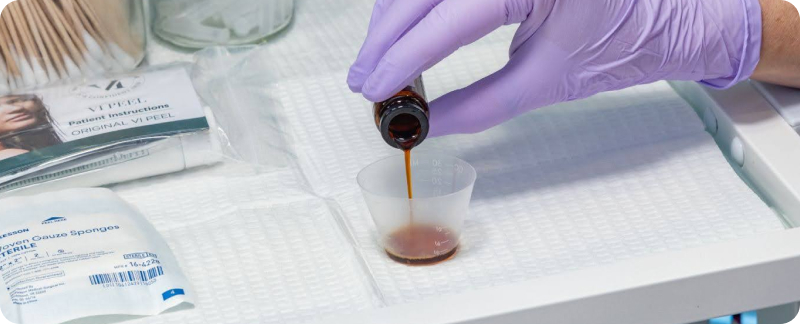
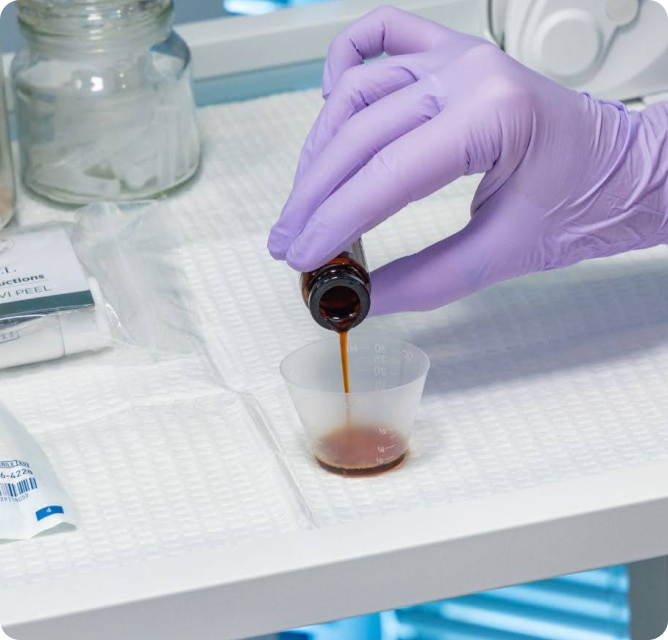
At WIFH, we offer the complete line of VI Peels treatments. These medical-grade chemical peels are designed to address a wide range of skin concerns while remaining safe and effective for all skin types and skin tones.
What sets VI Peels apart is their unique synergistic blend of active ingredients, including trichloroacetic acid (TCA), phenol, salicylic acid, retinoic acid, and vitamin C. This carefully balanced formulation works on multiple levels to exfoliate damaged skin, suppress melanin production, and deliver nourishing antioxidants during the peeling process, supporting optimal healing and recovery.
The Spectrum of Chemical Peels
| Peel Type | Penetration Depth | Key Characteristics |
|---|---|---|
| Superficial | Upper epidermis | Mild acids (glycolic, lactic); minimal peeling; best for maintenance & mild discoloration; typically requires multiple sessions |
| Medium-Depth | Through epidermis and papillary dermis | Formulated with ingredients like TCA, phenol, retinoic acid; visible peeling for 5–7 days; delivers more corrective results for hyperpigmentation in fewer treatments |
| Deep | Reticular dermis | Most dramatic results; carries higher risk & extended recovery; less commonly used in modern aesthetic practice |
At WIFH, we most often recommend medium-depth chemical peels for hyperpigmentation because they provide meaningful pigment correction while maintaining a strong safety profile across all Fitzpatrick skin types (I–VI). Treatments such as the VI Peel allow our practitioners to precisely customize depth, formulation, and treatment timing based on your individual skin assessment and goals.
VI Peels for Hyperpigmentation
VI Peel Original
The VI Peel Original is the foundational peel in the VI Peel family and serves as an excellent starting point for patients new to chemical peels or those with mild to moderate skin concerns. This versatile peel tackles skin concerns at the cellular level by delivering a precise blend of TCA, retinoic acid, salicylic acid, phenol, and vitamin C.
Best for:
- General skin rejuvenation and maintenance
- Mild hyperpigmentation and sun damage
- Fine lines and early signs of aging
- Improving overall tone and texture
- First-time chemical peel patients
At WIFH, VI Peels are performed in a series of three treatments spaced 4 to 6 weeks apart for optimal pigment correction and skin renewal. While you may notice brighter skin after one peel, meaningful and longer-lasting improvement develops over a complete series.
VI Peel Advanced
The VI Peel Advanced is designed for patients with more visible signs of aging who want to improve both pigmentation and overall skin quality. This advanced formulation stimulates collagen production while addressing discoloration, making it a great option for patients experiencing age-related skin changes alongside uneven tone.
Best for:
- Moderate sun damage and hyperpigmentation
- Fine lines and wrinkles
- Loss of firmness and elasticity
- Mature skin showing multiple signs of aging
- Patients seeking both pigment correction and collagen stimulation
At WIFH, VI Peel Advanced is typically performed as a series of three treatments spaced 4 to 6 weeks apart for optimal skin renewal and long-term improvement. Your practitioner will determine whether VI Peel Advanced is the best option based on your skin concerns, goals, and overall treatment plan.
VI Peel Precision + Peptides
When patients ask about the most effective chemical peel for hyperpigmentation, VI Peel Precision + Peptides is often our top recommendation. This advanced formulation is specifically designed to target stubborn pigment concerns, including melasma, post-inflammatory hyperpigmentation (PIH), and sun-related discoloration.
By combining powerful exfoliating acids with pigment-suppressing and brightening ingredients, this peel works to both lift existing discoloration and help prevent new pigment from forming.
Best for:
- Melasma and hormonally driven pigmentation
- UV-induced sun damage
- Post-inflammatory hyperpigmentation (PIH)
- Age spots and uneven tone
- Patients needing targeted pigment correction
At WIFH, this peel is also performed in a series of three treatments, spaced 4 to 6 weeks apart. Because melasma can be hormone-driven and prone to recurrence, maintenance treatments and medical-grade skincare are often recommended after completing your initial series.
VI Peel Purify with Precision + Peptides
For patients managing both active acne and lingering hyperpigmentation, VI Peel Purify with Precision + Peptides offers a comprehensive, dual-action solution. This formulation is designed to target breakouts while simultaneously correcting the dark marks and discoloration left behind by previous acne.
By addressing both inflammation and pigment at the same time, it helps interrupt the cycle of acne-related hyperpigmentation.
Best for:
- Active acne with post-inflammatory hyperpigmentation
- Dark marks and discoloration from breakouts
- Acne-related textural irregularities
- Oily, congested skin
- Patients who want to address multiple concerns simultaneously
As with all VI Peels at WIFH, we recommend a series of three treatments spaced 4 to 6 weeks apart for optimal correction of both acne and pigment.
VI Small Body Peel and VI Large Body Peel
Hyperpigmentation doesn’t only affect the face. Many patients also struggle with dark spots, uneven tone, and sun damage on the neck, chest, arms, shoulders, back, and hands. VI Body Peels extend the same corrective technology to larger treatment areas.
Because body skin is thicker and cellular turnover is slower than on the face, consistency is key.
Best for:
- Sun damage on the neck, chest, arms, shoulders, hands, and back
- Keratosis pilaris on arms and legs
- Back acne and acne-related hyperpigmentation
- Uneven tone and rough texture on larger areas
We typically perform body peels in a series of three treatments spaced 4 to 6 weeks apart, with maintenance treatments as needed to preserve results.
Why We Recommend a Series of Three VI Peels
Rather than thinking of a chemical peel as a one-time treatment, it’s best to view it as part of a customized treatment plan. While many patients notice brighter, smoother skin after their first peel, the most significant improvement in hyperpigmentation typically develops over multiple treatments.
At WIFH, we generally recommend a series of three VI Peels spaced 4 to 6 weeks apart. This treatment schedule allows each peel to build on the results of the previous one by gradually lifting existing pigmentation, encouraging healthy cell turnover, and supporting long-term skin renewal.
The exact number of treatments depends on factors such as the type of hyperpigmentation being treated, your skin tone, and your individual goals. During your complimentary consultation, your practitioner will recommend a personalized treatment plan designed to achieve the safest and most effective results.
Ingredients to Look for in Chemical Peels for Hyperpigmentation
Not all chemical peels are created equal. The effectiveness of a peel depends largely on its formulation. Specifically, the active ingredients it contains and how those ingredients work together.
Here are the key pigment-fighting ingredients to look for, all of which are found in the VI Peel formulations we use at WIFH:
- Trichloroacetic Acid (TCA): Trichloroacetic acid is a cornerstone ingredient in medium-depth chemical peels. It works by denaturing skin proteins, which creates controlled exfoliation of the epidermis and upper dermis. This process activates the skin’s natural wound-healing response, stimulating new collagen and elastin production while shedding pigmented surface cells. TCA has been widely studied for its ability to improve sun damage, hyperpigmentation, fine lines, and overall skin texture when used in carefully calibrated formulations.
- Retinoids (Retinoic Acid): Retinoids are vitamin A derivatives that increase cellular turnover by binding to retinoid receptors in the skin. This signals skin cells to renew more quickly, helping pigmented cells rise to the surface and shed faster. Retinoids also support collagen synthesis, refine texture, and improve tone irregularities, making them a key component in peels designed to treat discoloration and acne-related pigmentation.
- Vitamin-C (Ascorbic Acid): Vitamin-C is a powerful antioxidant with multiple benefits for hyperpigmentation. It helps inhibit tyrosinase, the enzyme responsible for melanin production, while neutralizing free radicals that can trigger pigment formation. Vitamin-C also brightens existing discoloration, supports collagen production, and helps protect skin from UV-related damage that can worsen hyperpigmentation over time.
- Lactic Acid: Lactic acid is an alpha-hydroxy acid (AHA) that exfoliates by breaking down the bonds between dead skin cells. In addition to exfoliation, lactic acid has humectant properties, meaning it helps the skin retain moisture. This makes it an excellent option for patients with dry or sensitive skin who still need pigment correction. Lactic acid has also been shown to inhibit tyrosinase activity, contributing to gradual improvement in uneven skin tone.
- Mandelic Acid: Mandelic acid is a gentle AHA with a larger molecular structure, allowing it to penetrate the skin more slowly and evenly. This makes it especially well-suited for sensitive skin types and darker skin tones that may be more prone to irritation or post-inflammatory hyperpigmentation. Mandelic acid has demonstrated benefits for improving pigmentation, acne, and overall texture with a lower risk of adverse reactions.
- Phenol: Phenol is a powerful peeling agent that has been used safely in dermatology for decades. In VI Peel formulations, phenol serves two important purposes: it enhances penetration for effective exfoliation and acts as a natural numbing agent, improving overall comfort during treatment. The phenol used in VI Peels is carefully balanced with other active ingredients to deliver corrective results while maintaining a strong safety profile. Because the phenol in VI Peels provides a natural numbing effect, many patients choose to combine their peel with Botox® during the same appointment. At WIFH, this combination treatment is called VI Peel ToxBooster.
- Hydroquinone: Hydroquinone, found in VI Peel Precision + Peptide boosters, is considered the gold standard for treating hyperpigmentation. It works by directly inhibiting tyrosinase, reducing melanin production at its source. When used as part of a structured treatment plan, hydroquinone can significantly improve melasma, sun spots, and post-inflammatory hyperpigmentation.
- Kojic Acid: Kojic acid is a naturally derived skin-brightening ingredient that also inhibits tyrosinase. Often used alongside hydroquinone and other brightening agents, kojic acid enhances pigment correction while supporting more even skin tone over time.
How to Maintain Your Chemical Peel Results
Maintaining your results after a series of VI Peels is just as important as the treatments themselves. Hyperpigmentation can return over time, especially when triggered by sun exposure, hormones, acne, or inflammation.
To help maintain clearer, more even-toned skin, we often recommend:
- Daily broad-spectrum SPF 30 or higher to help prevent new pigmentation from developing.
- Medical-grade skincare products that support healthy skin renewal and brighten discoloration, such as WIFH Brightening Pads, SkinCeuticals Discoloration Defense, the Obagi Nu-Derm® System, or a clarifying serum, based on your skin’s needs.
- Maintenance VI Peels as recommended by your practitioner, particularly for ongoing concerns like melasma.
- Complementary treatments that support long-term skin health and pigmentation management based on your individual needs.
At WIFH, every treatment plan is customized. Your practitioner may recommend combining professional treatments with medical-grade skincare to help maintain your results and support healthy, radiant skin over time.
Who Is a Good Candidate for a Chemical Peel?
Chemical peels can feel intimidating, but VI Peels are designed to be safe and effective across all skin types and skin tones. While most patients are candidates, individual factors help determine the ideal peel selection and treatment plan.
Fitzpatrick Skin Types and Safety
The Fitzpatrick Scale is a classification system used by dermatologists and skin care professionals to categorize skin types based on their response to UV exposure. Many traditional chemical peels carry significant risks for patients with Fitzpatrick Types IV–VI, including the potential for post-inflammatory hyperpigmentation, scarring, and uneven pigment removal. However, VI Peels have been specifically formulated to be safe and effective for all Fitzpatrick skin types (I–VI).
At WIFH, our team brings more than 20 years of experience treating patients representing more than 52 nationalities. Our experience includes over 1.5 million laser treatments performed on diverse skin tones, that depth of expertise informs how we approach all corrective skin treatments, including chemical peels. Every peel is carefully selected and customized to prioritize safety, pigment stability, and long-term results.
Ideal Candidates Include:
- Patients with Melasma: The VI Peel Precision + Peptides is particularly effective for melasma and can be safely used even on darker skin tones that may not be candidates for other brightening treatments.
- Acne-Prone Patients: Chemical peels help clear active breakouts, unclog pores, and prevent the post-inflammatory hyperpigmentation that often follows acne. The VI Peel Purify formulations are especially beneficial for these patients.
- Patients with Mature Skin: Chemical peels address multiple signs of aging simultaneously, pigmentation, fine lines, texture, and dullness, making them an excellent option for patients seeking comprehensive skin rejuvenation.
- Sensitive Skin Patients: With proper preparation and post-care, many patients with sensitive skin can safely undergo VI Peel treatments. The phenol in VI Peels provides a numbing effect that makes the treatment comfortable, and the formula delivers nourishment during the peeling process to support healing.
Schedule a Consultation with WIFH
Ready to discover the best chemical peel for hyperpigmentation for your unique skin? At WIFH, we believe consultations are essential when considering any skin treatment. Your consultation gives us the opportunity to understand exactly what you’re hoping to achieve and develop a customized treatment plan tailored to your specific needs.
During your complimentary consultation, one of our experienced practitioners will:
- Evaluate your skin type and tone using the Fitzpatrick Scale
- Assess the type and severity of your hyperpigmentation
- Discuss your treatment goals and expectations
- Review your medical history and current skincare routine
- Recommend the most appropriate VI Peel formulation for your needs
- Create a personalized treatment plan, which may include complementary treatments and medical-grade skincare (link shop)
Schedule your complimentary consultation today and take the first step toward clearer, more radiant skin.
Cost of Chemical Peels in Atlanta
| Treatment | Price |
|---|---|
| VI Peel | $375 |
| VI Peel Purify | $375 |
| VI Peel Advanced | $375 |
| VI Peel Precision Plus | $375 |
| VI Peel Purify w/ Precision Plus | $375 |
| VI Peel + Tox Booster | 20+ Units at $10/Unit**✨💉 | $575+ (save $3/unit) |

Sarah Richardson, LME
Sarah Richardson is a Medical Aesthetician and an Assistant Cosmetic Laser Practitioner licensed by the Georgia Medical Composite Board. With over 16 years of skin care experience, Sarah specializes in creating customized treatment plans to address our patients’ individualized needs. Through a combination of clinical facials and aesthetic procedures, as well as scientifically effective skin care products, Sarah helps patients achieve a healthy, radiant, and glowing complexion. She is truly passionate about what she does and loves to educate others who are looking to improve their skin’s health.


